Performance Management: Definition, Components, and Key Steps for Implementation
Performance can’t be decreed. It has to be built, steered, and adjusted continuously. Yet many companies still reduce their approach to an annual review rushed through in 45 minutes. The result: unclear objectives, demotivated employees, and struggling managers.
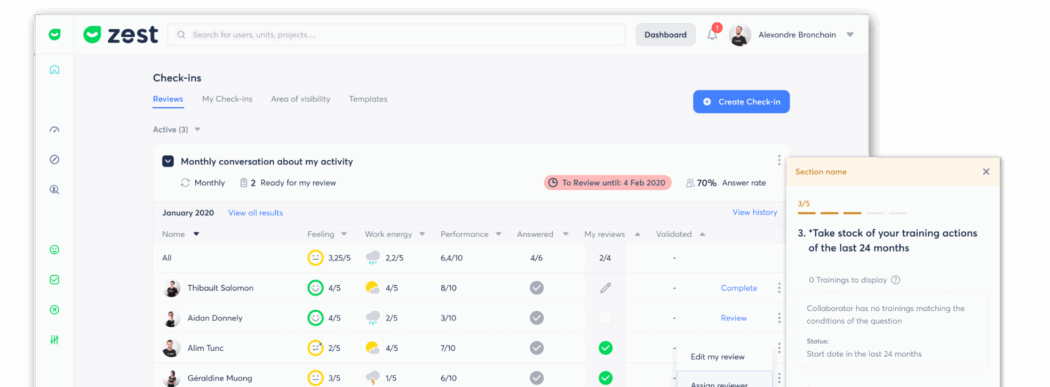
Performance management is a coherent system that aligns individuals with strategy, develops skills, and nurtures engagement day to day. Discover how to understand it, structure it, and deploy it effectively.
What is performance management?
Performance management refers to the full set of processes, practices, and tools an organization puts in place to steer and develop the performance of its employees, teams, and departments, in line with its overall strategy.
It goes beyond individual assessment. It covers the entire chain: setting expectations, defining objectives, tracking results, giving feedback, developing skills, and recognizing contributions.
The scope is threefold:
Individual: each employee knows what’s expected of them and how to progress
Collective: teams are aligned on shared objectives and support each other
Organizational: leadership has a consolidated view to make informed decisions
Performance management vs. annual review: what’s the difference?
This is the most common confusion. The annual review is a one-off exercise. Performance management, by contrast, is a continuous process.
| Annual Review | Performance Management | |
|---|---|---|
| Frequency | Once a year | Ongoing |
| Purpose | Retrospective assessment | Development and steering |
| Stakeholders | Manager + HR | Manager + employee + HR + leadership |
| Format | Formal review | Regular rituals + structured reviews |
| Impact | Rating, compensation | Engagement, growth, sustained performance |
Why has performance management become a strategic priority?
The numbers are clear: according to our employee engagement barometer BaromEX, only 37% of French employees are motivated by their work. The cost of a disengaged employee is estimated at 35,000 euros per year, per employee.
Conversely, companies with high engagement levels see their profitability grow by 23% on average. Performance management isn’t just another HR tool. It’s a direct lever for competitiveness.

The key components of performance management
An effective performance management system rests on six interdependent pillars. Remove one, and the whole structure wobbles.

Setting objectives (FAST, OKR)
It all starts here. Clear, measurable objectives aligned with strategy are the essential condition for performance that can actually be steered. Two methods dominate:
- The FAST method: objectives should be Frequently discussed, Ambitious, Specific, and Transparent. Developed by MIT, it favors regular dialogue and collective visibility over strict adherence to formal criteria.
- The OKR method (Objectives and Key Results): an ambitious objective broken down into 3 to 5 measurable key results. More agile, better suited to fast-changing environments. Google, Intel, and LinkedIn have used it for decades.
Best practice is to co-build objectives with the employee. Buy-in increases. Engagement follows.
Continuous tracking and management rituals
An objective set without follow-up is an objective forgotten. Performance management relies on regular rituals: weekly or biweekly one-to-ones, team check-ins, quarterly performance reviews.
These moments aren’t control meetings. They’re spaces for dialogue where the manager acts as a coach: identifying obstacles, adjusting priorities, recognizing progress.
Regular feedback (360°, one-to-one)
Feedback fuels progress. Without regular, constructive feedback, an employee moves forward blind.
360° feedback broadens the perspective: instead of receiving input only from their manager, the employee gets feedback from peers, subordinates (where applicable), and sometimes internal clients. It’s a powerful tool for personal and managerial development.
The essential condition for this to work: training managers to give useful feedback. Vague or poorly framed feedback does more harm than no feedback at all.
Assessment: annual reviews and skills assessments
The annual performance review remains a key moment, provided it isn’t the only moment of dialogue all year. It’s used to review objectives achieved, assess skills against the role’s requirements, and set objectives for the next period.
The skills assessment, distinct from the annual review, is a deeper exercise that identifies the employee’s strengths, areas for development, and career aspirations over the medium term.
Individual development: training plans and upskilling
Assessment is pointless if it doesn’t lead to concrete action. The individual development plan turns identified needs into action: training, mentoring, cross-functional assignments, internal mobility.
It also sends a strong signal to the employee: the company is investing in their growth. The impact on engagement and retention is measurable.
Recognition and reward
Performance deserves recognition. And recognition isn’t limited to variable pay. It also comes through public acknowledgment, growth opportunities, autonomy, and trust.
An employee who feels recognized is an employee who engages more and stays longer.
The performance management cycle
Performance management is an iterative process. It never stops. Each cycle feeds into the next.
 Plan: define objectives and expectations

At the start of the cycle (annual, biannual, or quarterly), manager and employee define objectives, success indicators, and available resources together. This phase lays the foundation for everything that follows.
 Track: steer continuously

Throughout the cycle, regular check-ins help verify progress, identify blockers, and adjust priorities. The performance dashboard lets everyone visualize their progress in real time.
 Assess: measure results

At the end of the cycle, the formal review compares results against the objectives set. This assessment must be objective, fair, and based on criteria defined in advance, not on impressions.
 Act: develop, recognize, correct

The cycle ends with concrete decisions: training plans, compensation adjustments, promotions, recognition, or closer support in cases of underperformance. Then a new cycle begins.
How to implement performance management in your company
Deploying a coherent, lasting performance management system takes five steps.
1
Step 1: Define a clear performance policy
Before rolling out any tools, you need a vision. What does “performing well” mean in your company? Which behaviors do you value? How much weight do you give to the collective versus the individual?
This policy must be shared, understood, and embodied by leadership. Without buy-in from top management, no system will hold.
2
Step 2: Align individual objectives with strategy
Every employee needs to understand how their work contributes to the overall strategy. This is the principle of vertical alignment: leadership’s strategic objectives cascade into team objectives, then into individual objectives.
OKRs are particularly well suited to this exercise: they make the cascade visible and understandable at every level.
3
Step 3: Train managers for their role as coach
70% of the drivers of employee engagement are tied to management practices. The manager is the pivot of the whole system. Without training and support, they stay stuck in a controlling role when what’s needed is a developing role.
Training managers in constructive feedback, running reviews, setting objectives, and managing underperformance is a non-negotiable investment.
4
Step 4: Choose the right tools and rituals
A good performance management tool simplifies without adding rigidity. It should make it easy to launch reviews, track objectives in real time, gather feedback regularly, and analyze data to make better decisions.
Zest is built for exactly this: an intuitive platform, accessible on mobile and web, that covers the entire cycle (objectives, OKR, reviews, feedback, people review) and integrates with your existing HRIS tools.
5
Step 5: Measure, report back, and adjust
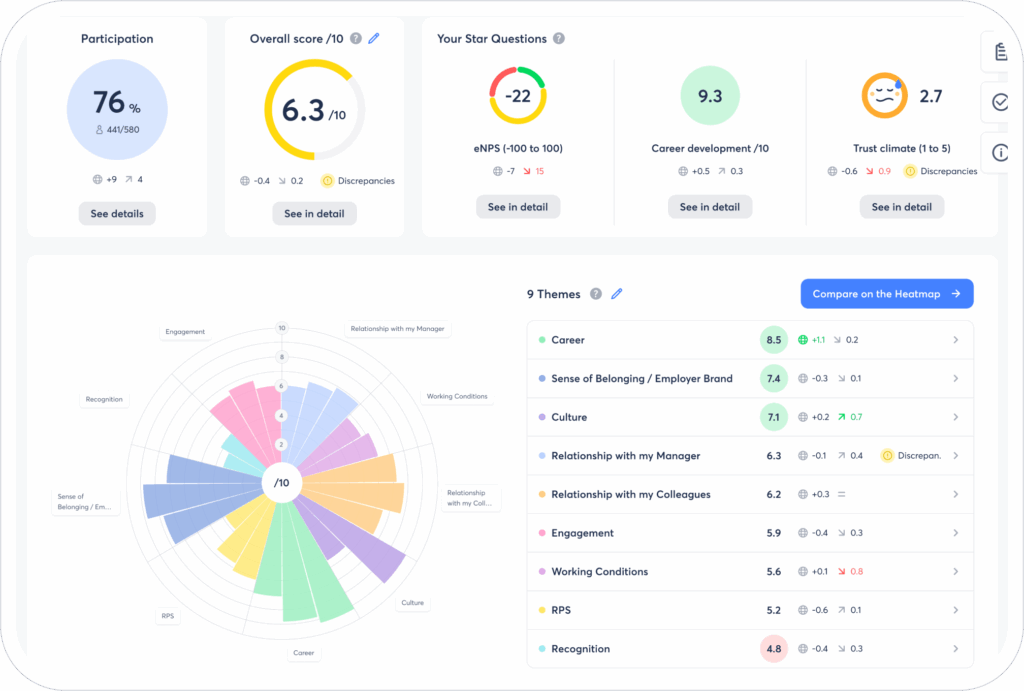
Performance management runs on data. Review completion rates, engagement scores, skills progression, eNPS by team: these are all indicators that help identify what’s working and what needs adjusting.
And above all, always report results back to employees. Transparency strengthens trust and engagement.

Mistakes to avoid
To successfully deploy performance management in your organization, avoid these 5 mistakes:
- Reducing performance management to the annual review. One review a year isn’t enough. Early warning signs need to be caught continuously.
- Setting objectives without involving the employee. Objectives imposed top-down create disengagement, not performance.
- Assessing without clear criteria set in advance. The absence of an evaluation framework opens the door to arbitrariness and a sense of unfairness.
- Giving no follow-up to assessments. If an assessment leads to nothing, the next one will be met with reluctance.
- Training managers on tools but not on mindset. A tool without the managerial skills behind it doesn’t produce performance.
The impact of performance management on business
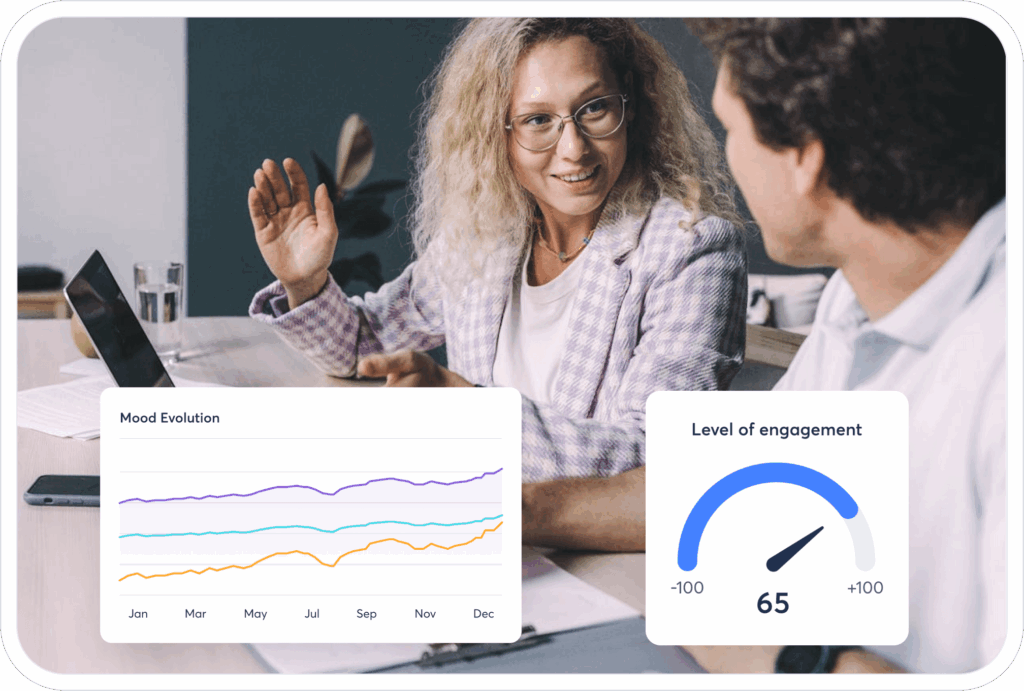
Compassionate management and performance: not opposites, but complements
It’s sometimes said that compassion and a demand for performance are at odds. That’s a false opposition. Employees who feel heard, recognized, and supported are also the ones who get most involved and deliver the best results.
Economic performance and employee engagement aren’t opposing forces: they feed each other.
What tool should you use to steer your teams’ performance?
A good performance management system needs a tool that supports it without adding bureaucracy.
Zest is the HR platform built for teams who want to steer performance and engagement in one place. Annual and professional reviews, objectives and OKR, 360° feedback, people review, real-time dashboards: everything is centralized, simple, and accessible on mobile and desktop alike.
Over 400 companies already trust Zest to transform their management practices and get concrete results.
Nos clients témoignent
« Zest in one word: actionable. It’s a real tool that supports our transformation, delivers concrete, clear results, and saves us considerable time in rolling out our HR initiatives. »
– Candide Rossato, Director of Impact, Garance

FAQ: Frequently asked questions about Performance Management
What’s the difference between performance management and the annual review?
The annual review is a one-off assessment moment. Performance management is a continuous process covering the whole year: setting objectives, regular tracking, feedback, skills development, and recognition. The annual review is one component of it, not the whole picture.
What are the key components of a performance management system?
A complete performance management system includes six components: setting objectives (SMART or OKR), continuous tracking through regular rituals, feedback (including 360°), formal assessment, a skills development plan, and recognition of contributions.
How do you set effective objectives as part of performance management?
Objectives should be co-built with the employee, aligned with company strategy, and measurable. The SMART method ensures clarity and realism. OKRs suit agile environments and allow a visible cascade from leadership down to the ground.
How often should performance reviews take place?
Frequency depends on the format. One-to-ones between manager and employee work best weekly or biweekly. Performance reviews are often quarterly. The annual review remains a key structuring moment, to be complemented by regular check-ins throughout the year.
How does performance management improve employee engagement?
Clear objectives, regular feedback, genuine recognition, and a concrete development plan are all direct engagement drivers. An employee who knows where they’re headed, is supported by their manager, and has their contributions recognized gets more involved and stays longer.
Which KPIs should you track to steer performance?
Key indicators to track include the objective achievement rate, engagement score (eNPS), turnover rate, absenteeism rate, review completion rate, and skills progression. Ideally, these sit in a centralized dashboard updated in real time.
What is visual performance management?
Visual performance management means making objectives, indicators, and results visible, physically or digitally, to the whole team. Dashboards displayed in meeting rooms, dashboards shared on an HR platform, indicators updated in real time: the goal is to foster transparency, accountability, and continuous improvement.
More news with Zest
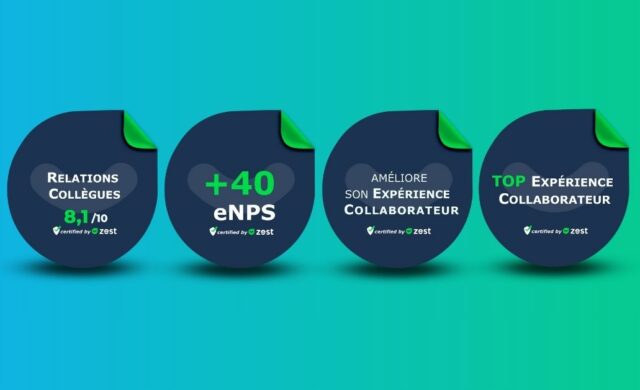
Zest launches its Labels!
Zest launches different types of labels to promote companies’ HR commitment

Pulse Surveys: Definition, Sample Questions and How to Get Started
Pulse surveys are a type of HR survey that allow you to assess employee satisfaction, commitment and development through regular surveys.
So why have these surveys become an essential part of the HR toolbox?

How to Improve Human Resource Management (HRM) in Your Company
Modern HRM puts people at the heart of performance. Explore its key levers for balancing productivity and quality of working life.
Allow all cookies
Continue without accepting

Zest respects your privacy
Zest and its partners use cookies or similar technologies and process personal data which may be cross-referenced with information provided as part of our services for the following purposes: to improve your user experience, to carry out audience statistics and studies to improve our offers, to provide you with services tailored to your interests, to display targeted advertising on our site or those of our partners, and to measure the performance of such advertising. Some cookies are necessary for the operation of the site and our services. You can accept, manage your preferences by purpose or continue browsing without accepting.
Cookie settings
Allow all cookies
