How to Improve Human Resource Management (HRM) in Your Company

Article summary
Modern HRM puts people at the core of performance. Discover the key levers that combine productivity with quality of working life.
How to Improve Human Resource Management (HRM) in Your Company
HRM is about far more than payroll and contracts. It is the lever that connects company strategy with the day-to-day reality of employees. Managed well, it becomes a genuine competitive advantage. Managed poorly, it becomes a constant source of friction between leadership and frontline teams.
What Is Human Resource Management (HRM)?
Human resource management (HRM) covers all the practices a company puts in place to recruit, administer, develop and retain its employees in support of its strategic objectives. It spans the entire employee journey, from recruitment to departure, including training, career development and quality of working life.
HRM answers a simple question: how do you align the needs of the business with those of the people who keep it running? Striking that balance between collective performance and individual well-being is what defines successful human resource management.
HRM vs. Personnel Management: What’s the Difference?
Personnel management is limited to administration: payroll, contracts, working hours and legal compliance. HRM goes further by adding a strategic dimension: skills development, employee engagement, employer brand and management performance.
In short, personnel management administers a workforce. HRM develops human capital, with a long-term vision and the aim of creating value for both the company and its employees.
The Functions and Missions of Human Resource Management
HRM is organized around several core functions that complement and depend on one another. Each one meets a specific business need at a given stage of the employee lifecycle.
Recruitment and Onboarding
HRM must attract the right profiles, build an effective selection process, and ensure successful integration once the contract is signed. Poorly prepared onboarding is one of the leading causes of early departures. Design a structured welcome program for the first few weeks, with regular check-ins, to secure this critical phase.
Compensation and Administration
Payroll, contracts, employee benefits, labor law compliance… The administrative function remains the backbone of HRM, even though it has been largely digitized in recent years thanks to HR administration software.
Training and Career Management
Developing skills, anticipating future needs, supporting internal mobility. An effective training policy is not just about ticking off legal requirements. It should be built on real needs identified on the ground, not solely from an HR spreadsheet.
Employee Relations and Social Dialogue
Negotiating with employee representatives, managing company agreements, preventing labor disputes. Strong HRM fosters high-quality social dialogue, which eases tensions and makes change management smoother.
Health, Safety and QWLC
Preventing occupational risks, upholding working conditions and continuously improving Quality of Life and Working Conditions (QVCT). This area of HRM has expanded significantly in recent years, driven by regulatory pressure as well as employees’ growing expectations.
Why HRM Matters for Your Business
Optimizing human resource management is not a theoretical exercise. It is a measurable performance lever that benefits both the company and its employees.
Economic and Organizational Stakes
Effective HRM reduces the hidden costs of turnover, absenteeism and hiring mistakes. It also streamlines the organization by clarifying roles, available skills and future needs. Make a habit of calculating your turnover rate and replacement costs: these figures are often your strongest argument for securing additional HR budget.
Human and Legal Stakes
On the human side, HRM shapes employee engagement, motivation and occupational health. On the legal side, it protects the company with regard to labor law obligations, collective agreements and litigation risks. Neglecting one inevitably weakens the other.
How to Manage and Optimize HRM Day to Day
Even the best HR strategy is worthless if it is not put into practice. Ongoing management is what turns an HR policy into tangible results.
Essential HR Metrics
A handful of metrics is enough to get a clear picture of your company’s HR health:
- Turnover rate
- Absenteeism rate
- Average time to hire
- Employee engagement rate
- Payroll costs
Start by tracking three to five key HR KPIs rather than trying to measure everything at once. It is the best way to build a lasting culture of data-driven HR management across your teams.
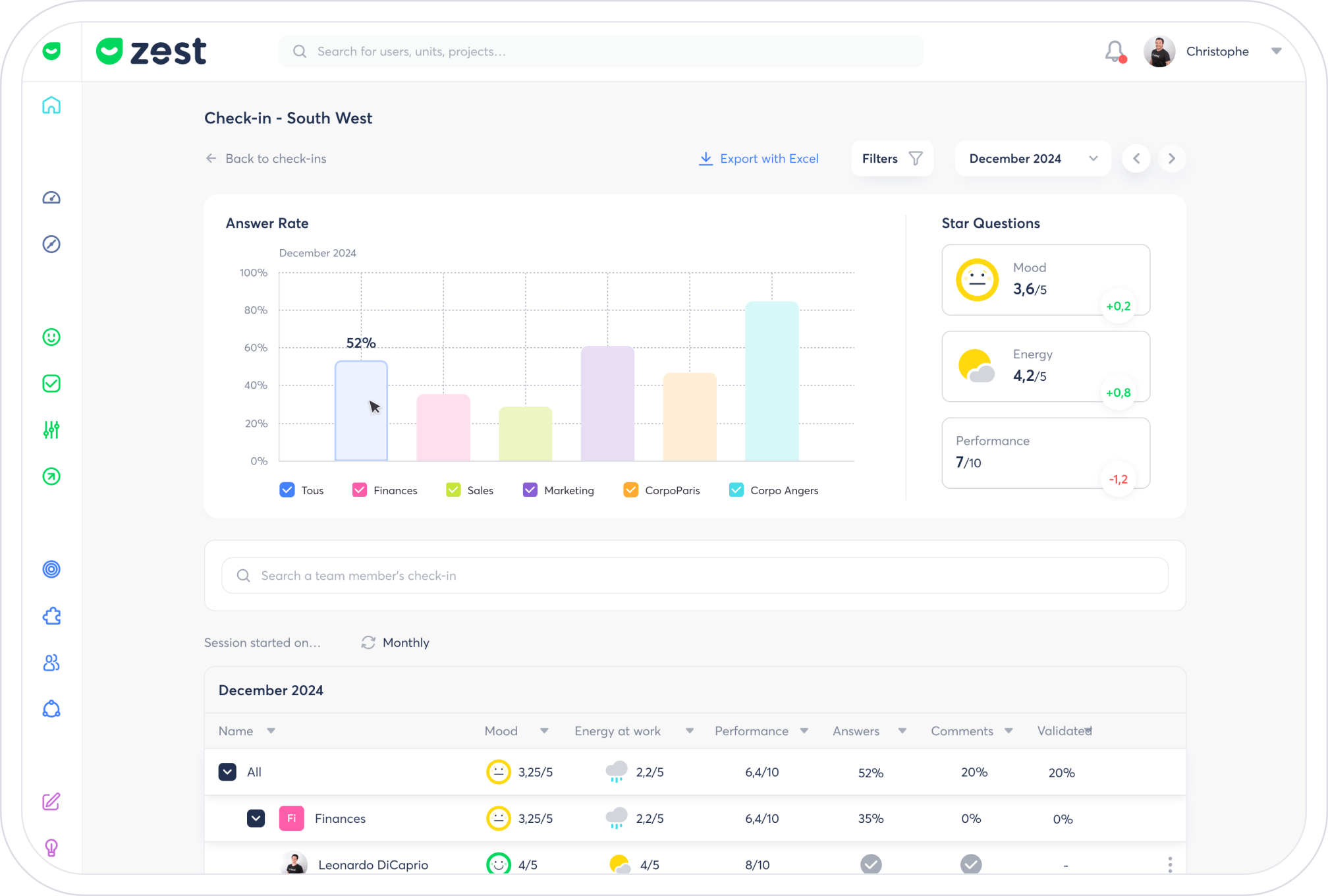
The HR Dashboard: Your Central Management Tool
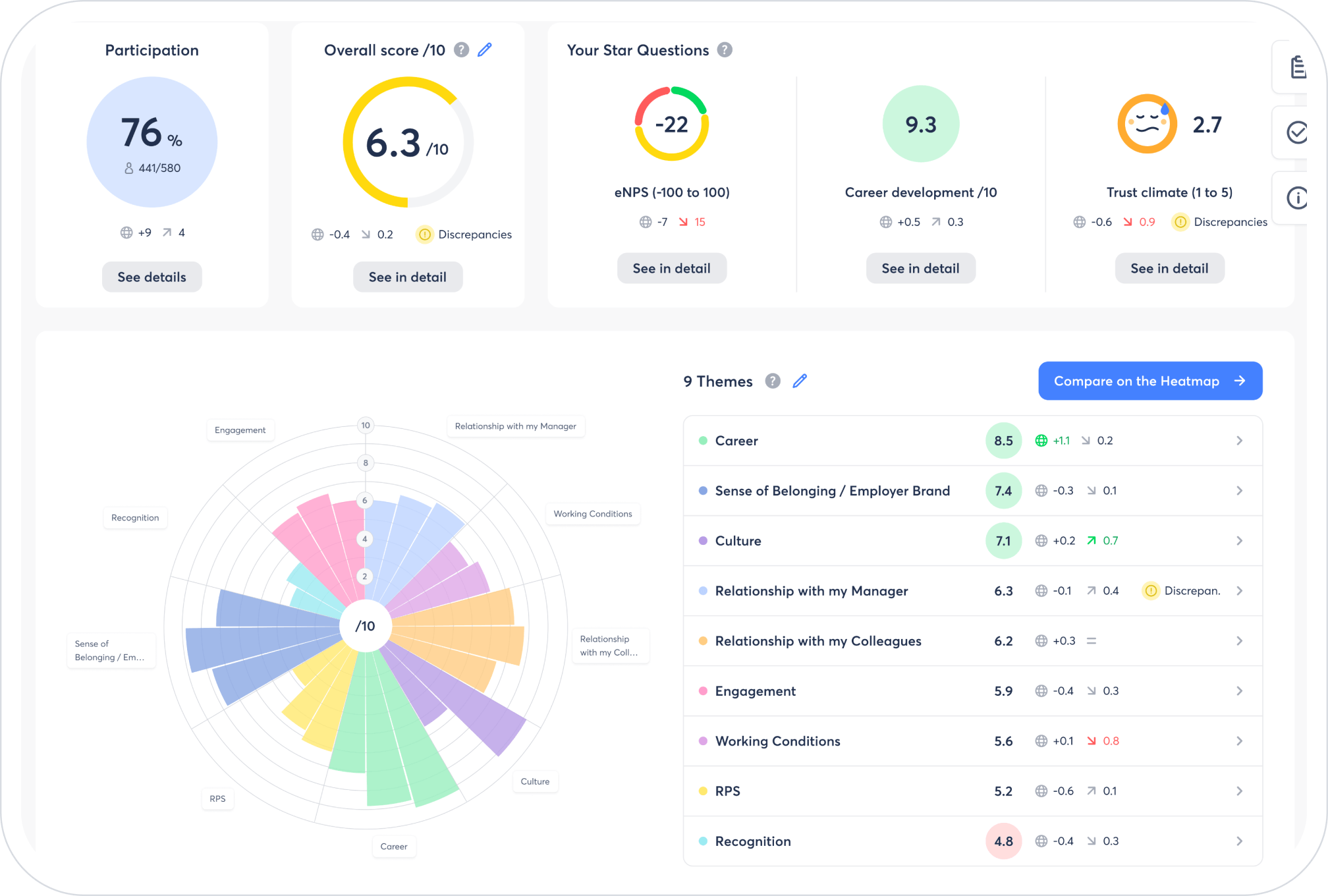
An HR dashboard brings all your HR KPIs together in a concise, actionable overview. It lets you compare results over time, detect weak signals before they turn into problems, and share objective data with leadership. Build it around your current strategic priorities rather than a generic template found online: a relevant HR dashboard reflects the challenges specific to your business.
The Role of HR Software
With ever more data to process, HR software has become essential for automating tracking, improving data reliability and responding faster. An employee listening and performance management platform such as Zest centralizes survey results, reviews and engagement metrics in a single tool, so you can turn that data into concrete action plans rather than simple observations.
Looking to structure your HR management with reliable, actionable data? Book a demo with a Zest expert to see how our platform can help.
FAQ
Frequently Asked Questions About Human Resource Management
HRM is the set of practices used to recruit, administer, develop and retain a company’s employees in support of its overall strategy.
The main objectives of HRM are to align available skills with business needs, ensure legal compliance, reduce turnover and absenteeism, and foster employee engagement and well-being.
Companies typically rely on an HRIS for administration, review and objective-management tools for performance, and employee listening solutions to measure engagement and guide HR action plans.


