Feedback Culture:
Definition, Challenges, Implementation
Building a genuine feedback culture means creating an environment where people speak openly, where everyone feels heard, and where feedback becomes a real driver of progress.
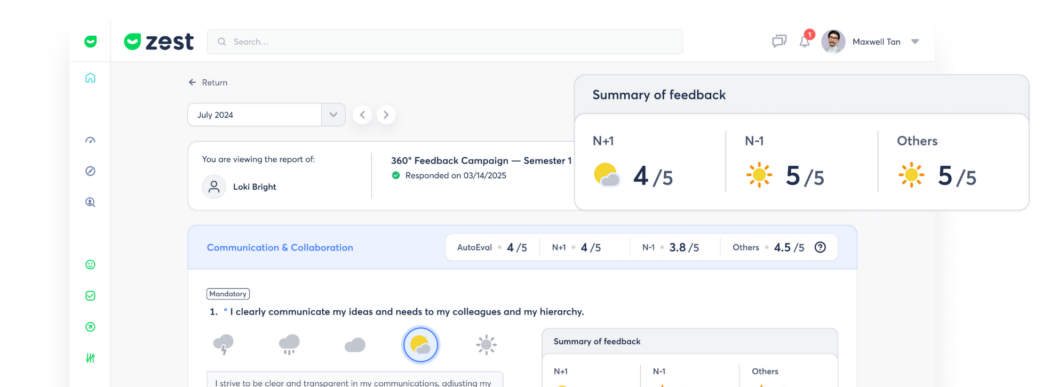
What exactly is feedback? How do you move from occasional exchanges to a regular, structured practice that fuels engagement, strengthens collaboration, and improves collective performance?
What Is Feedback?
Feedback: Definition
Feedback is a formal or informal comment given to someone to acknowledge their achievements, suggest areas for improvement, or flag a blocker. Giving feedback to a colleague can happen verbally or in writing, right after an event or during a planned session, but it should always be specific, factual, and tied to a clear objective.
Main purposes:
- Encourage ongoing, constructive dialogue.
- Recognize behaviors and actions that contribute to shared success.
- Identify areas for growth to help build skills.
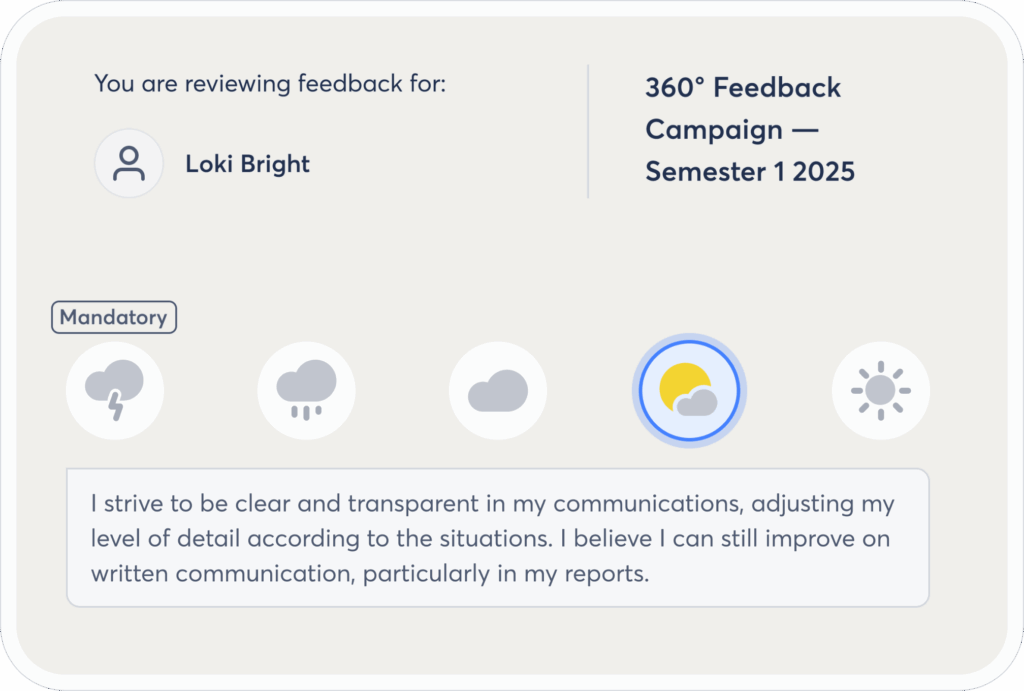
💬 Feedback example: “Your input in the meeting helped unblock the situation and reassure the team.”
What Is a Feedback Culture?
A feedback culture goes beyond the occasional exchange. It’s a shared mindset where giving and asking for feedback becomes part of daily habits, at every level of the company. Here are its pillars:
1
Frequency
Feedback given throughout the year, not just at the annual review.
2
Openness
A climate of trust drives honesty.
3
Balance
Recognizing achievements as much as suggesting improvements.
Why does feedback culture matter? Building this culture creates a feedback loop: an ongoing process where feedback drives adjustments, which in turn generate new successes.
What Are the Different Types of Employee Feedback?

Positive Feedback
Highlights what’s working well and boosts motivation.
💬 Positive feedback example: “The way you handled the presentation won over the client and helped close the deal.”

Constructive Feedback
Aims to improve a behavior or outcome based on facts. How do you give constructive feedback to your team?
Recommended feedback methods:
- Feedback and the DESC method: Describe, Express, Specify, Consequences.
- Feedback and the OSCAR method: Objective, Situation, Behavior, Alternatives, Results
💬 Constructive feedback example: “Some of the data in your presentation wasn’t accurate. Checking it beforehand would make things clearer.”

Negative Feedback
Points out a problem tactfully to prompt correction. Good timing and a measured tone are essential to preserve the working relationship.
When Should You Give and Receive Feedback?
Key moments :
 In the moment:

Right after an action, to maximize impact.
 After some reflection:

During a dedicated meeting, to dig deeper.
 Regularly:

Through feedback tools like an internal barometer or a pulse survey.
Receiving feedback helps people better understand their strengths and areas for improvement, and adjust their practices over time.
360° Feedback: Eliminating Blind Spots
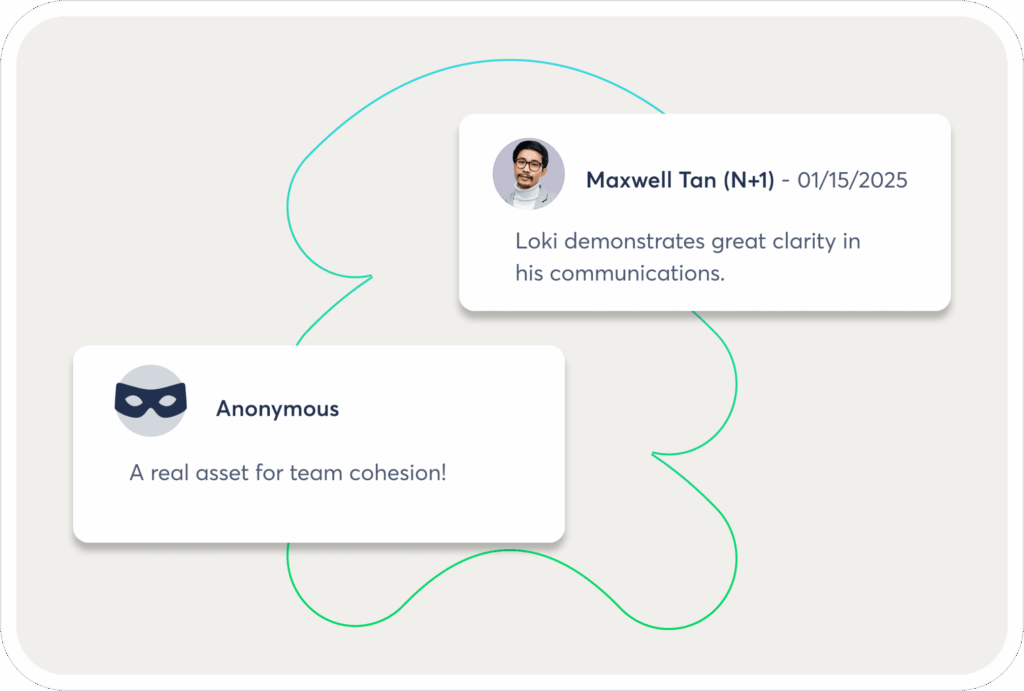
360° feedback expands on the classic feedback model. Instead of a single point of view, it brings together input from several contributors around one person (manager, colleagues, sometimes the wider team). The person involved can also self-assess beforehand, to compare their own perception with how their professional circle sees them.
Two formats exist, depending on the organization’s maturity on the topic:
- 180° feedback: input from the direct manager and immediate team. Ideal for a first rollout.
- 360° feedback: the circle widens to include peers, and sometimes external contacts, for a fuller picture.
This approach is especially useful for developing managers, supporting someone in a new role, or grounding an internal mobility decision in objective data. One point of caution: contributor anonymity must be genuinely guaranteed, not just promised, or feedback risks becoming less candid.
What Are the Benefits of a Feedback Culture in the Workplace?
Continuous improvement: frequent feedback makes it possible to quickly adjust working methods within a stronger climate of trust.
Stronger engagement: recognition fuels motivation and engagement.
Skill development: regular feedback drives learning.
How to Build a Feedback Culture at your Workplace?

Demonstrate value
Explain concrete benefits, both for individuals and for the organization.
Involve leadership
Managers and executives need to lead by example.
Make it easy to practice
Offer feedback tools that are simple and accessible to use.
How Do You Successfully Implement a Feedback Culture?
Get managers on board
They set the pace and need to embody the practice by giving quality feedback often.
Train all employees
Teach people how to give positive, clear, constructive, and well-received feedback (to a colleague or their manager), as well as how to ask for feedback during a review and accept it as an opportunity.
Choose the right feedback tools
The right solutions help structure exchanges and track their evolution over time.
What Tools Should You Use to Build a Feedback Culture?
360° Feedback
Using a dedicated feedback questionnaire, it gathers input from colleagues, managers, and direct reports, offering a comprehensive, objective view. This 360° feedback can be run online, which makes participation and results processing easier.
Pulse Survey
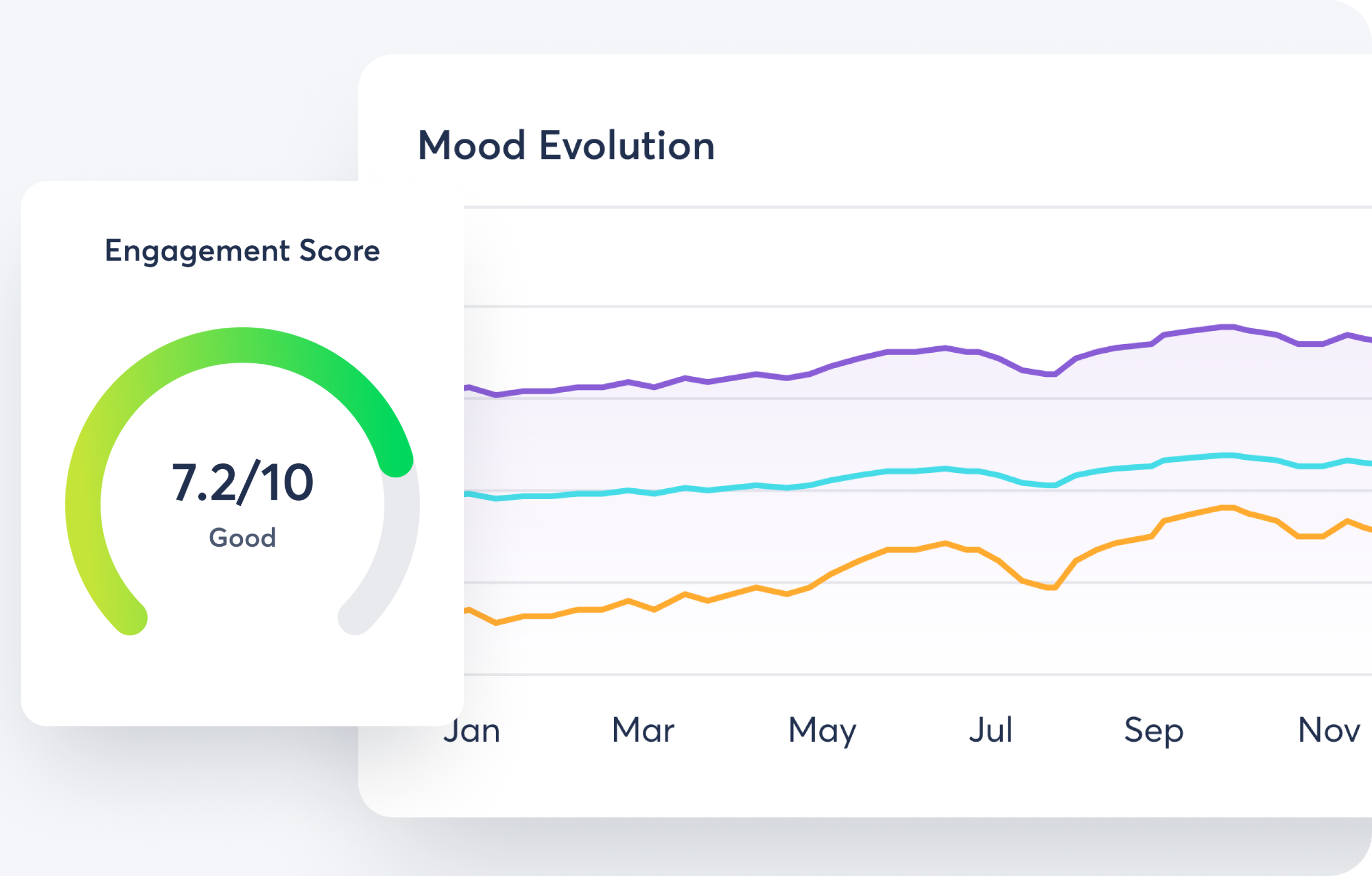
Pulse surveys let you regularly measure how employees feel and how engaged they are, and quickly spot early warning signs so you can act fast.
Social Barometer
The social barometer tracks key indicators around morale, satisfaction, overall engagement trends, and the quality of the social climate.
Our clients say it best
« Having data, and being able to explain why we’re putting a given policy in place, gives real legitimacy to HR policy and shows leadership’s full backing for what we do. »
– Marie-Karine Tibi, HR Director, Celio

Q&A
Any questions ?
How do you promote a feedback culture in the workplace?
By highlighting best practices, thanking contributors, and building employee feedback into collective rituals.
What are the limits of a feedback culture in the workplace?
If feedback is negative and too frequent, it can create fatigue or tension. Finding the right rhythm matters.
Can every company build a feedback culture?
Yes, as long as it’s adapted to the size of the organization, its industry, and its management maturity.
Allow all cookies
Continue without accepting

Zest respects your privacy
Zest and its partners use cookies or similar technologies and process personal data which may be cross-referenced with information provided as part of our services for the following purposes: to improve your user experience, to carry out audience statistics and studies to improve our offers, to provide you with services tailored to your interests, to display targeted advertising on our site or those of our partners, and to measure the performance of such advertising. Some cookies are necessary for the operation of the site and our services. You can accept, manage your preferences by purpose or continue browsing without accepting.
Cookie settings
Allow all cookies
