People Analytics: Definition, Challenges, and Implementation
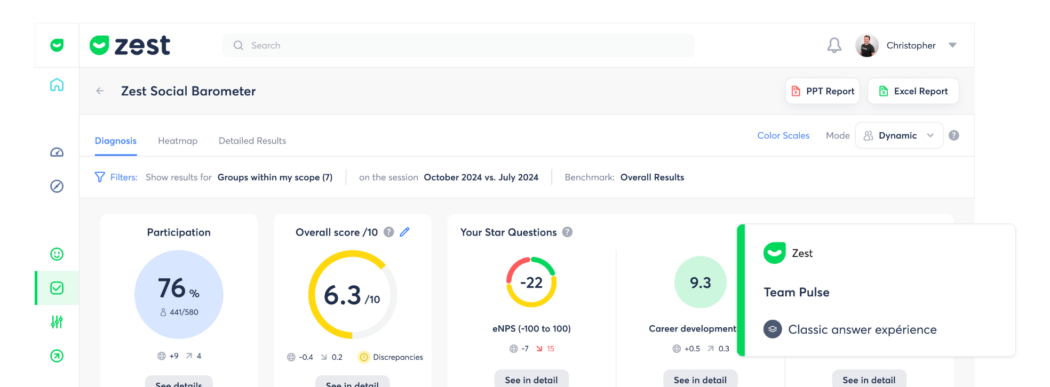
HR departments today have access to a considerable volume of data. Hiring, departures, engagement, absenteeism, managerial performance… The question is no longer whether you have data. The real question is: what are you doing with it?
Too often, this data stays scattered across different tools. It gets observed, but rarely put to use. People Analytics changes that.
People Analytics turns HR data into concrete decisions. It helps you spot early warning signs, make faster calls, prioritize the right actions, and above all, activate the HR levers that genuinely impact company performance.
What is People Analytics?
People Analytics involves analyzing employee related HR data to guide HR and managerial decisions. HR decisions no longer rely solely on intuition or experience. They’re grounded in reliable data, analyzed over time. A People Analytics approach lets you:
- Analyze team engagement
- Understand the causes of turnover
- Identify factors behind collective performance
- Detect organizational risks
- Steer the employee experience
The goal isn’t to produce dashboards. It’s to activate concrete levers such as:
- Adjusting managerial practices in a team where engagement is dropping
- Prioritizing actions in a department where absenteeism is rising
- Building a specific action plan when departures increase
People Analytics is what takes you from observation to execution.
What are the challenges of People Analytics?
The stakes of a People Analytics approach are strategic for your organization.

Making faster decisions backed by reliable data
HR teams regularly need to weigh:
- Engagement priorities
- Retention policy
- The evolution of managerial practices
- Work organization
Without data, these decisions stay approximate. People Analytics helps trigger informed decisions.
Steering engagement over time
Engagement can’t be measured just once a year. High performing organizations set up continuous listening with employees to:
- Detect early warning signs
- Adjust actions quickly
- Steer teams in real time
Data then becomes a genuine organizational alert system.
Demonstrating the impact of HR actions
Executive leadership expects HR to demonstrate impact. People Analytics helps connect:
- Team engagement
- Managerial quality
- Workforce stability
- Organizational performance
HR decisions become measurable, steerable, and justifiable.
How do you implement a People Analytics approach?
Implementing People Analytics doesn’t mean launching a two year complex project. It’s about moving forward through structured, actionable steps.
1
Identify the HR decisions you need to inform
Start with a simple question: which HR decisions do you need to make more often?
Among the most common HR challenges, you’ll find:
- Reducing turnover
- Improving team engagement
- Strengthening managerial performance
- Prioritizing HR actions
These decisions should guide your approach.
2
Structure your key indicators
A People Analytics approach relies on clear, shared indicators. The most widely used HR KPIs include:
- Turnover rate
- eNPS
- Employee engagement score
- Absenteeism rate
- Perceived managerial quality
- Intent to leave
The goal is to structure data around the decisions you need to make.
3
Set up continuous employee listening
HR data shouldn’t be collected once a year. It should be gathered throughout the year.
Internally, you can frequently run:
- Short surveys such as pulse surveys
- Employee feedback
- Social barometers
- Mood check ins, whether daily, weekly, or bi monthly
This lets you steer teams effectively over time. You catch early warning signs quickly and can put together a tailored action plan.
4
Turn analysis into an action plan
This is the step that’s often overlooked, yet it’s the most important one. Analysis only has value if it triggers concrete action:
- Launching targeted actions on the issues you’ve identified
- Adjusting managerial practices
- Prioritizing certain teams
People Analytics has to get teams moving.
What tools should you use for People Analytics?
A People Analytics approach becomes hard to steer when data is scattered across files. High performing companies rely on tools that can centralize, analyze, and activate HR data.
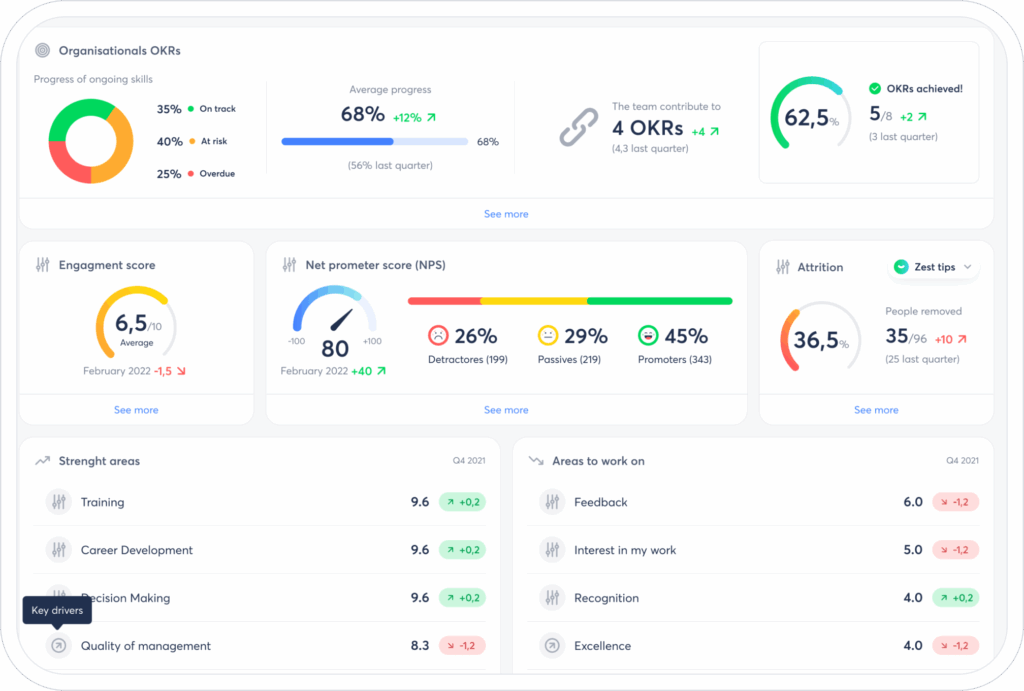
Dedicated HR software like Zest lets you:
- Collect employee data from collective surveys and individual interviews
- Collect data from teams, whether desk based or in the field
- Track key indicators tailored to your organization
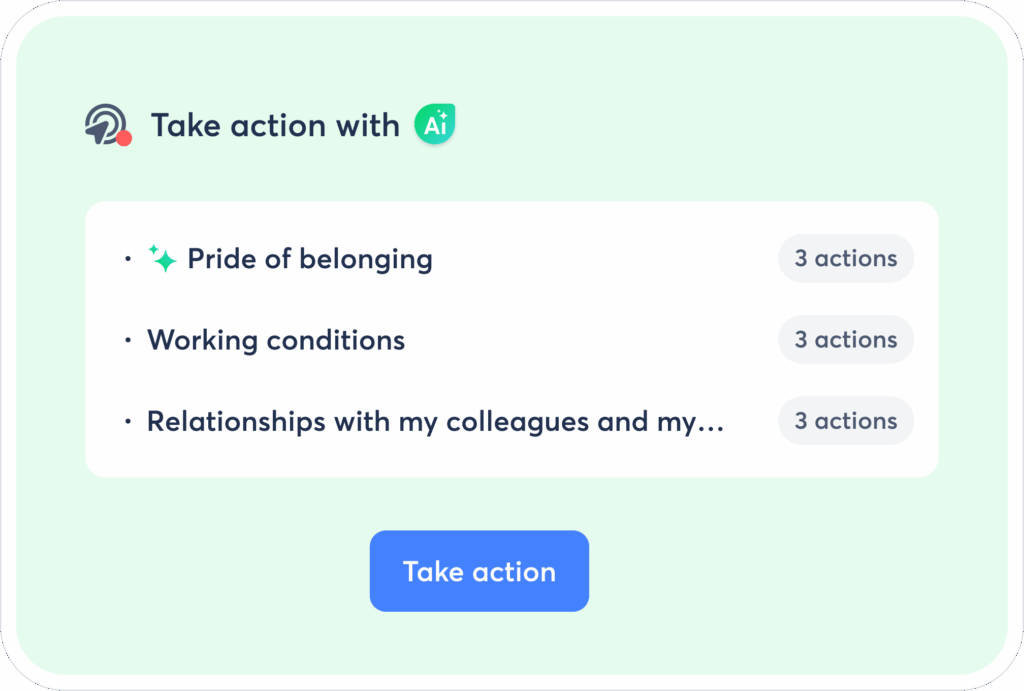
- Use AI to quickly identify early warning signs or friction points
- Compare results across departments or by your own criteria
- Launch tailored action plans
With a platform like Zest, HR data doesn’t stay theoretical. It becomes an immediate lever for action. Our AI powered employee engagement software helps you:
- Identify HR priorities
- Guide managers
- Adjust actions over time
HR teams can then steer engagement and the employee experience with precision.
Which indicators should you measure for People Analytics?
A People Analytics approach relies on a set of structured indicators.

Employee engagement
Employee engagement measures how involved teams are in their work and how attached they feel to the company. This indicator helps you:
- Prioritize managerial actions
- Detect the risk of disengagement
- Identify teams that need support
Absenteeism rate
The absenteeism rate is often an early indicator of organizational tension. A rise can point to work overload, a fragile social climate, and/or managerial difficulties.
Turnover rate
The turnover rate helps you assess team stability.
High turnover can signal a managerial issue, a need to adjust work organization, or a lack of growth prospects or recognition.
Intent to leave
Employee surveys help identify people who may be likely to leave the company. Measuring intent to leave lets you anticipate departures and act before they happen.
These indicators reach their full value when analyzed over time and by team.
What are the limits of People Analytics?
People Analytics is powerful, but it does call for some precautions.
 Data doesn’t replace being on the ground

Indicators should always be paired with dialogue between teams and managers. Data informs decisions. It doesn’t replace them. Quantitative indicators need to be cross referenced with qualitative ones.
 Too many indicators kill action

Some companies pile on indicators without ever managing to act. You shouldn’t drown in metrics. A sound People Analytics approach favors a few key indicators, actionable analysis, and fast decisions.
 Data has to lead to action

The most common mistake is analyzing without acting. People Analytics should always turn analysis into concrete impact through a specific action plan. You need to communicate internally about what you’ve learned, the areas for improvement, and progress over time, to encourage employees to keep sharing their experience.
People Analytics marks a major shift in the role of HR. It’s no longer just about analyzing data. It’s about activating it to guide decisions and accelerate collective performance.
With the right indicators, continuous employee listening, and the right tools, organizations can steer engagement in real time, prioritize HR actions, trigger informed decisions, and turn analysis into concrete impact.
That’s exactly the promise behind Zest: activating strategic HR data, revealing talent, and unlocking your company’s growth.
Our clients say it best
« This is the innovative solution we were looking for to boost employee listening across our company. It’s a modern, user friendly platform that helps us respond faster and breaks with the codes of traditional surveys. It makes collaborative approaches easier. It delivers results that are concrete and accessible up close. »
– Véronique Reclu, HR Director, Employee Experience, and Anne-Marie Cesari, Head of Client Experience Excellence, Crédit Agricole Pyrénées Gascogne

Frequently asked questions about People Analytics
What’s the difference between People Analytics and HR Analytics?
The two concepts are closely related. HR analytics mainly involves analyzing HR data to produce indicators. People Analytics goes further.
It aims to cross reference data, identify performance factors, guide managerial decisions, and trigger concrete actions. HR analytics observes; People Analytics activates decision making levers.
What’s the difference between People Analytics and People Review?
People Review is an internal management process. It generally involves assessing employee performance, potential, and growth prospects. People Analytics, on the other hand, analyzes data at the organizational level: team engagement, workforce stability, managerial performance, organizational climate.
The two approaches complement each other. People Review lets you assess individuals. People Analytics lets you steer collective dynamics.
More news from Zest

Mastering the professional development interview: key strategies and best practices
The professional development interview is more than a legal requirement—it’s a strategic tool for building skills and boosting talent retention.
In this article, discover five key levers to make these conversations truly impactful.

fixed-term contracts and annual reviews: 5 keys to a successful evaluation
Annual performance reviews must be applied to fixed-term contract employees once the company has formalized them for all staff, in order to avoid unequal treatment and legal risks. These interviews, structured around realistic objectives, demonstrated skills, and a clear evaluation framework, provide tangible benefits both for the company (increased productivity, team cohesion, reduced legal risks) and for the employee (skills recognition, identification of training needs, growth opportunities).

The annual review for apprentices: a valuable HR opportunity too often overlooked
Annual reviews for apprentices are a powerful HR lever to develop talent, strengthen engagement, and promote managerial equity. Discover how this strategic practice improves the retention of work-study students and transforms your company into a true springboard for tomorrow’s skills.
Allow all cookies
Continue without accepting

Zest respects your privacy
Zest and its partners use cookies or similar technologies and process personal data which may be cross-referenced with information provided as part of our services for the following purposes: to improve your user experience, to carry out audience statistics and studies to improve our offers, to provide you with services tailored to your interests, to display targeted advertising on our site or those of our partners, and to measure the performance of such advertising. Some cookies are necessary for the operation of the site and our services. You can accept, manage your preferences by purpose or continue browsing without accepting.
Cookie settings
Allow all cookies
