Over 400 HR Directors drive their teams’ performance with the Zest Suite
A good social climate is the silent engine of collective performance. What is social climate within a company? How do you create a work environment where everyone feels heard, valued and motivated? And how do you address, day to day, the major HR challenges: lasting engagement, talent retention, employer brand and quality of life at work?
Social Climate: Definition
Social climate refers to the quality of human and professional relationships within an organization. It reflects how employees perceive their work environment: communication, recognition, management style, working conditions, trust, respect and everyday wellbeing.
It’s an intangible indicator, but its impact is very real. How do you analyze social climate? A positive social climate shows up as smooth cooperation, strong collective motivation, few tensions and an attractive employer brand. Conversely, a decline in social climate is quickly noticeable: strained relationships, high turnover, recurring absenteeism and falling team engagement.
What Are the Stakes of Social Climate for a Company?
A good social climate isn’t just about a pleasant atmosphere. It’s a strategic success factor that shapes employee motivation, productivity and loyalty.
Productivity
In a calm climate and a positive work atmosphere, employees feel less stressed, stay more focused, cooperate more and reach their objectives more effectively.
Talent Retention
A fulfilling work environment encourages employees to stay, reducing turnover and recruitment costs.
Employer Brand
A good social climate is a real draw. Employees become the company’s best ambassadors, and candidates are more inclined to join.
Which Indicators Should You Track to Measure Social Climate?
Analyzing and measuring social climate turns gut feeling into actionable data. The following indicators offer a clear, objective view.
eNPS (Employee Net Promoter Score)
It measures how likely an employee is to recommend their company as a place to work. Simple to measure and track over time, it’s one of the most widely used social climate indicators for gauging team engagement and satisfaction.
Turnover Rate
It measures how often employees leave the company, whether voluntarily or not. A high rate can signal waning motivation, a lack of career prospects or internal tensions.
Absenteeism Rate
It shows the proportion of absent days relative to total working days. Often a sign of employee wellbeing, or the lack of it, it can also reflect the quality of working conditions and work-life balance.
Internal Promotion Rate
It measures the share of employees who move up to a higher position within the company. It’s a strong indicator of the career growth opportunities on offer and the company’s ability to develop talent internally. A high rate reflects a strong commitment to skills development and internal mobility.
Average Employee Tenure
This is the average length of time employees stay with the company. It’s a simple but telling indicator of team stability and loyalty.
Pay Rise Rate
It shows the proportion of employees who received a salary increase over a given period. It’s an indicator of recognition and of the company’s investment in its teams, but also a signal about the career growth opportunities on offer.
Which Tools Should You Use to Measure and Track Social Climate Over Time?
Several methods can be combined for a complete picture:
Social Climate Questionnaire: focused on specific dimensions (recognition, management, working conditions).
Social Climate Survey: occasional questions on atmosphere, communication and workload. A one-off snapshot of morale and satisfaction.
Social Climate Barometer: regular tracking of how things evolve over time.
Social Climate Audit: an in-depth analysis carried out by a third party for a thorough diagnosis of social climate.
How Do You Improve Social Climate in a Company? And What Actions Should You Put in Place?
Involve Every Level of the Organization
Responsibility for social climate is shared between leadership, managers and employees alike.
Improve Internal Communication with Employees
Transparency, active listening and information sharing reduce misunderstandings and build trust.
Boost Employee Motivation
Clear objectives, recognition of achievements and a sense of purpose at work are essential.
Improve Working Conditions (Quality of Life at Work)
Pleasant spaces, well-suited tools and optimized work organization support employee wellbeing.
Reward Employees
Simple gestures (thank-yous, congratulations, celebrating collective and individual wins) have a strong impact.
Offer Better Pay and Career Growth Opportunities
Fair compensation and motivating career paths strengthen engagement.
Energize Social Relationships
Social moments and group activities build connection.
Build a Feedback Culture and a Climate of Trust
Regular, constructive feedback makes it possible to quickly adjust practices.
Support a Healthy Work-Life Balance
Flexibility, remote work and respect for rest periods contribute to a calmer work life.
Get Support to Improve Your Social Climate with Zest!
Putting effective actions in place to improve social climate takes method and regular follow-up.
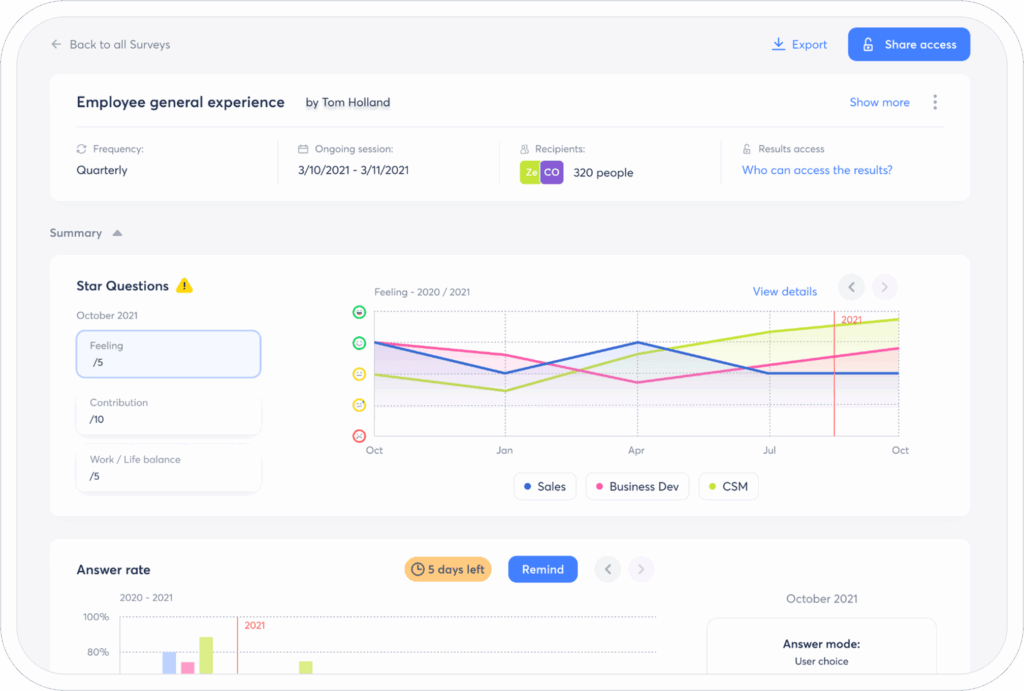
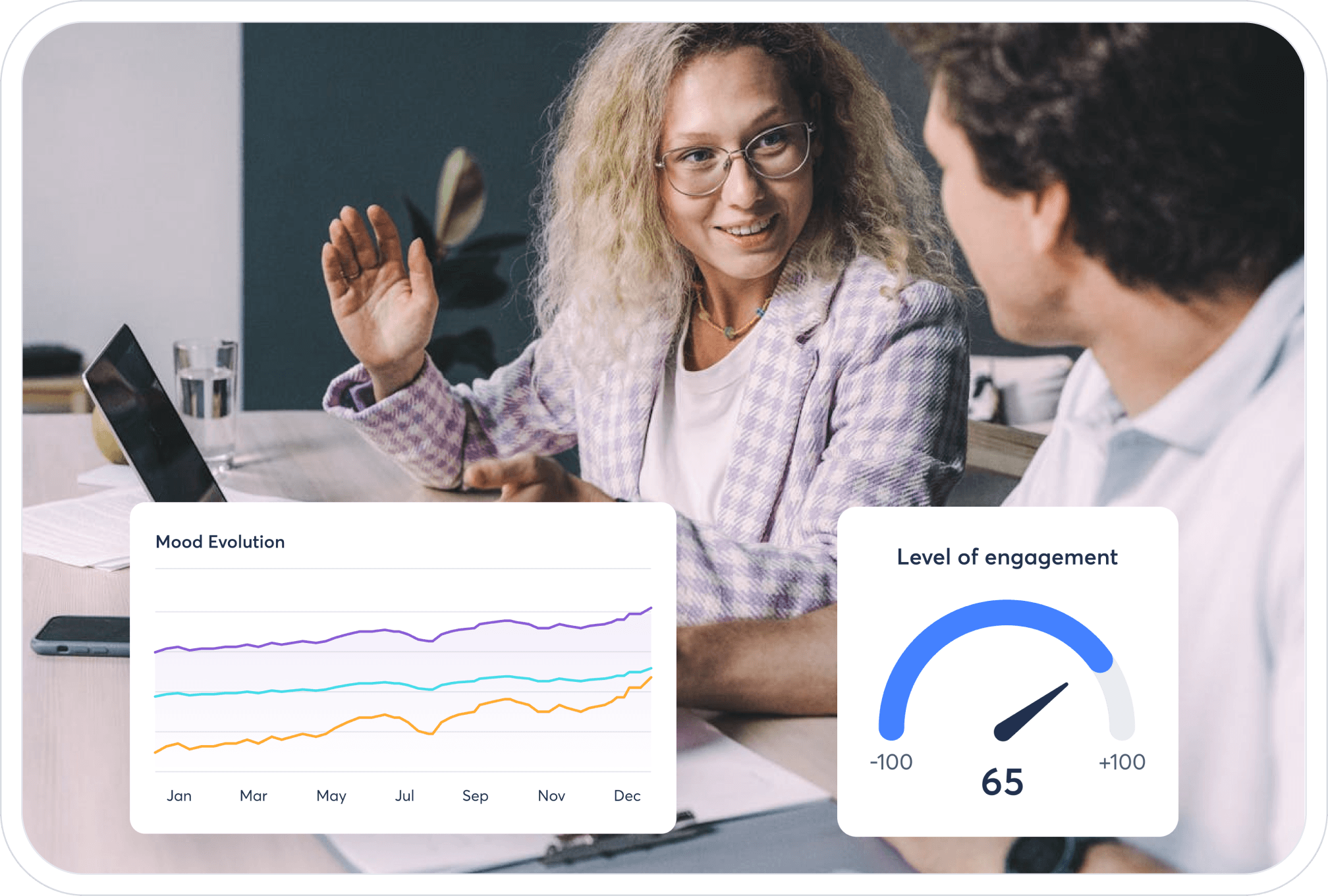
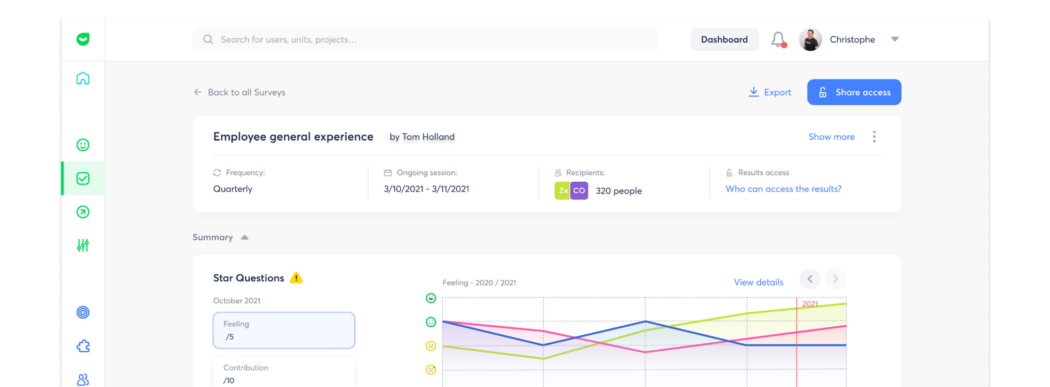
Zest lets you collect employee feedback, analyze key indicators and track progress over time in a social climate dashboard. With its surveys, barometers and continuous feedback features, it becomes easier to identify and steer improvement levers, and to measure the impact of the initiatives you put in place.
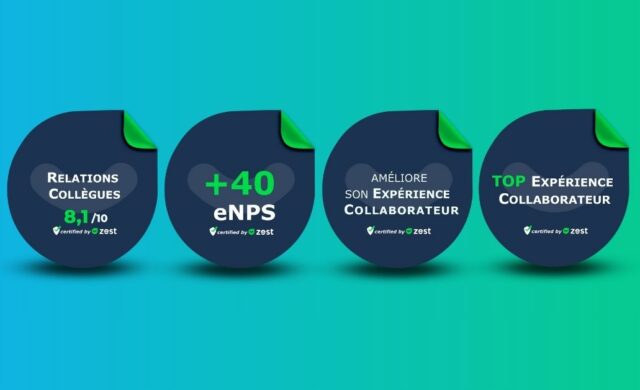
Discover labels to showcase your social climate initatives
Earning a label is a way to have your efforts toward a good social climate recognized, and to strengthen your appeal:
Zest
HappyIndex®AtWork
Top Employers
These labels can also serve as internal and external communication tools, and boost employees’ sense of pride in belonging.
« The tool’s reliability and objectivity were two key criteria in our selection. Designed by occupational psychology experts, it offers increasingly relevant features suited to real-world challenges on the ground.»
– Mathilde Elzière, Associate Director, Resoneo
Q&A
Do you have any questions ?
What is a poor social climate?
A tense social climate is marked by frequent friction, poor communication and cooperation, high turnover, sometimes rising absenteeism, and falling engagement.
Can an employee refuse a professional interview?
No, except in specific cases (sick leave, parental leave, etc.).
What is a healthy social climate?
It’s an environment built on trust, mutual respect, communication, smooth relationships and strong engagement.
How do you maintain a good social climate?
By regularly measuring satisfaction, staying alert to early warning signs and putting concrete actions in place as soon as they’re needed.
Zest and its partners use cookies or similar technologies and process personal data which may be cross-referenced with information provided as part of our services for the following purposes: to improve your user experience, to carry out audience statistics and studies to improve our offers, to provide you with services tailored to your interests, to display targeted advertising on our site or those of our partners, and to measure the performance of such advertising. Some cookies are necessary for the operation of the site and our services. You can accept, manage your preferences by purpose or continue browsing without accepting.














 Talent Retention
 Employer Brand