Employee listening:
measuring and continuously improving your employees’ satisfaction
Understanding what employees actually experience day to day has become a strategic priority for HR teams. Expectations are shifting, ways of working are transforming, and engagement can no longer be managed on intuition alone. Employee listening allows you to gather reliable data to improve your employees’ experience.
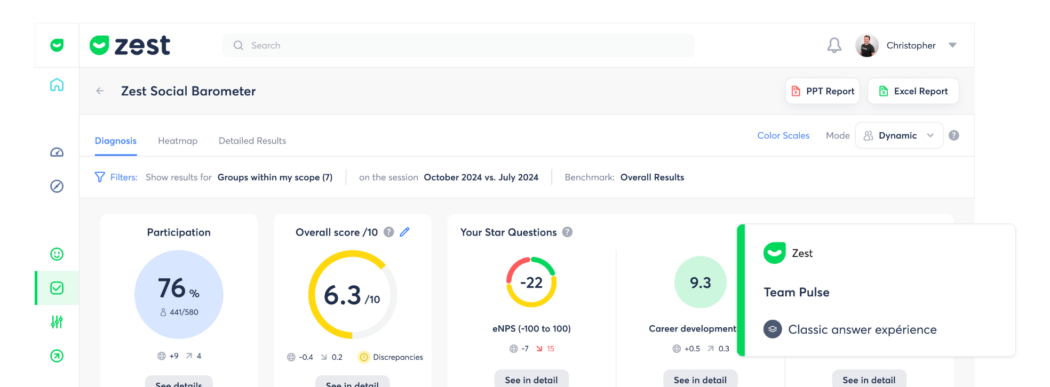
What is employee listening?
Employee listening means collecting, analyzing, and acting on employee feedback to better understand their experience at work. Done well, it helps identify early warning signs, activate the drivers of employee engagement, and turn HR data into concrete decisions.
At Zest, we believe in one thing: by putting strategic HR data to work, you reveal your talent and unlock your company’s growth. Set up effective employee listening with the right tools, and turn feedback into concrete action.
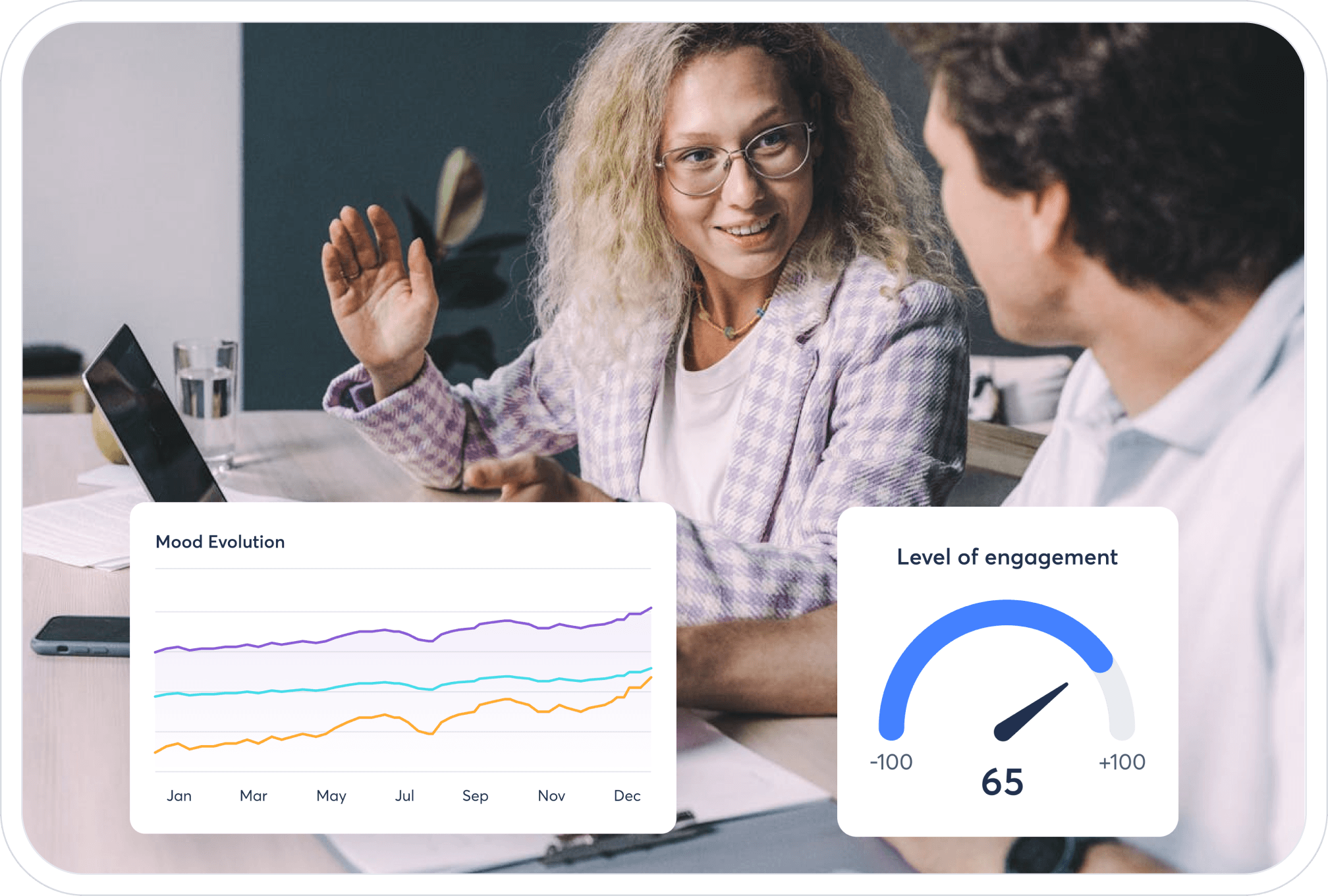
Key figures on employee listening
Organizations that structure their internal listening see measurable results.
Numbers speak for themselves:
 Employee engagement

Companies with strong employee engagement report up to 21% higher productivity.
Turnover
Engaged employees are 87% less likely to leave their company. Yet fewer than one in three employees believe their company genuinely acts on their feedback.
eNPS
According to our BaromEX study, the average Employee Net Promoter Score (eNPS) in France is just -17.1, meaning there are more detractors than promoters of the company.
Message is clear. Employees want to be heard. But above all, they want to see concrete action that matches their feedback. This is exactly where HR data becomes strategic.
A well-structured HR listening system helps detect key drivers of motivation, such as:
Purpose and recognition

Autonomy and empowerment

Professional and personal development

Quality of relationships and management

The question to ask is simple: does your organization really know what fuels its teams’ engagement?
The challenges of employee listening for employers
Setting up a listening approach can seem simple, but in practice, many organizations run into difficulties.

Trust
If employees doubt the confidentiality of their responses or the value of their feedback, they won’t express themselves freely. The data collected then becomes biased. Anonymity is key.
With Zest, anonymity is guaranteed to encourage open, honest feedback:
- Guaranteed anonymity above a minimum number of respondents
- Employees can choose whether to respond anonymously or not
- Data anonymization and security in compliance with GDPR
Taking action
Collecting HR data is relatively straightforward. Turning it into concrete decisions is far harder. Responding to HR surveys requires real effort from every employee, so it’s essential to avoid the practices that discourage them:
- Listening without following through
- Leading or biased questions
- Failing to communicate on survey results
- Only offering to listen during a crisis
- Relying solely on the annual review
- Lacking training and tools
Frequency and regularity
Many companies limit listening to a single yearly touchpoint, whether through the performance review or an annual social barometer. Yet employee experience is constantly evolving: workload, management, hybrid working arrangements, career progression, and more. An annual frequency simply isn’t enough to catch warning signs early and act on them in time.
Zest offers a continuous listening system that quickly identifies early warning signs and pain points, giving you a real-time view of engagement and social climate across the organization.
These poor practices undermine the listening process and cause it to lose credibility. As a result, employees respond less often, and less thoughtfully, to HR surveys.
Conversely, the highest-performing organizations adopt these key best practices:
- Build a framework of trust and confidentiality
- Adopt an active listening stance
- Follow up on feedback with transparency
- Diversify listening channels
- Train managers in active listening
- Listen more often, using short surveys
To be effective, employee listening needs to become a continuous process.
Continuous employee listening tools
To capture what’s really happening on the ground, several employee listening tools can be used, on their own or combined. Each one sheds light on a different aspect of your employees’ experience.
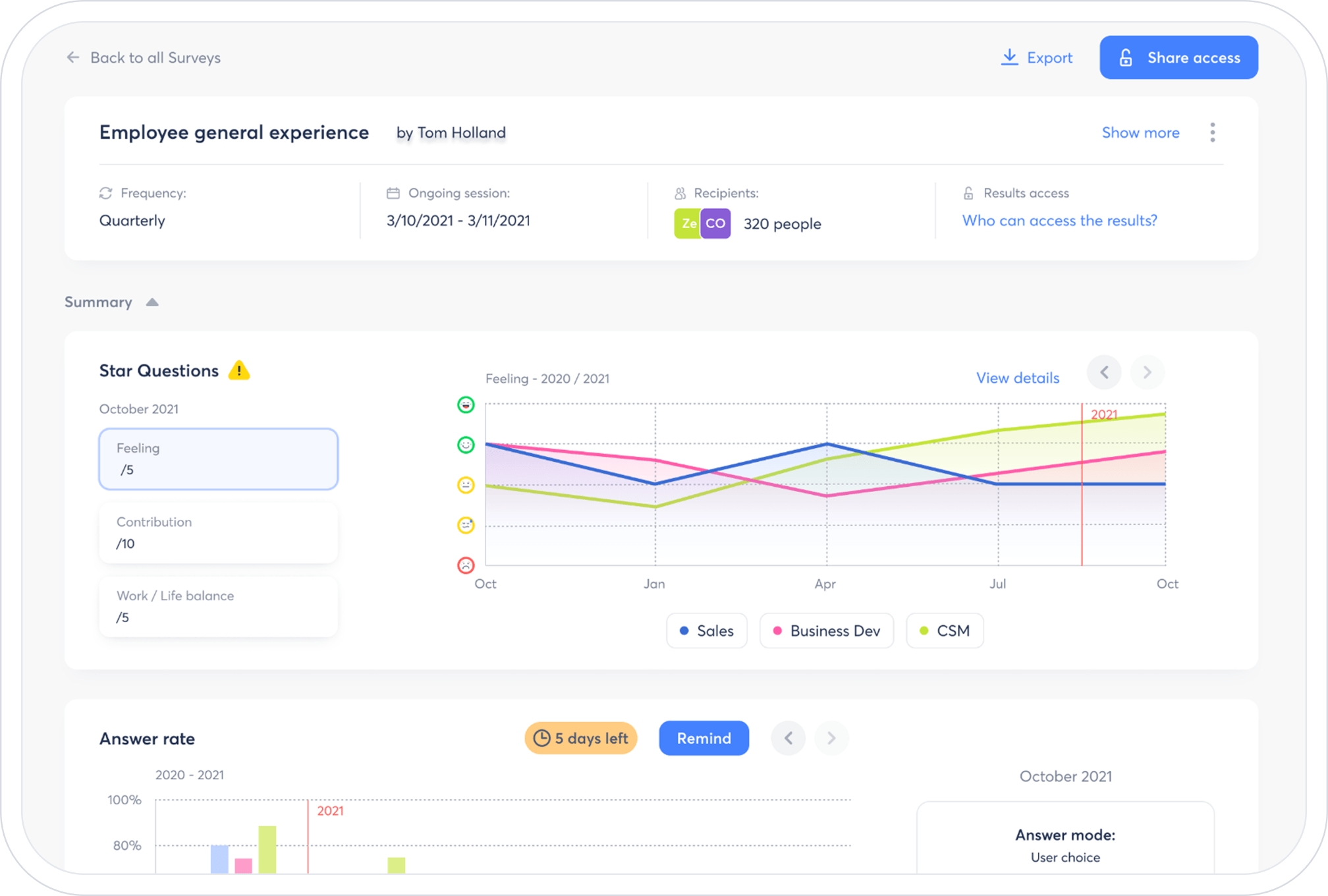
Social barometer
The social barometer is an in-depth questionnaire, typically run every one to two years. It measures the major dimensions of employee experience:
- Social climate
- Engagement and motivation
- Perception of management
- Working conditions Sense of belonging to the company
The social barometer offers the advantage of a global view of the organization, but it remains a one-off exercise and doesn’t allow you to track how perceptions evolve in real time.
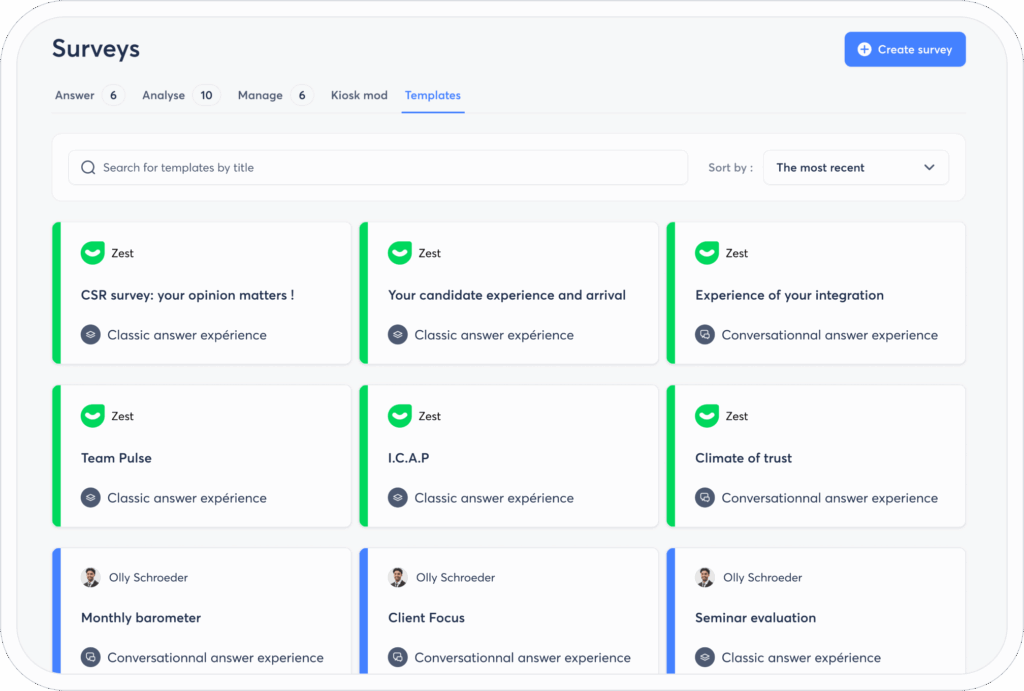
Pulse surveys
Pulse surveys have become a cornerstone of HR listening. Short and frequent, they take the organization’s pulse on an ongoing basis. Thanks to targeted questions, they help quickly detect, and act on:
- Motivation drops
- Managerial tensions
- Risks of disengagement
Pulse surveys work by checking in with employees more often, using short, targeted surveys that take little time to complete.
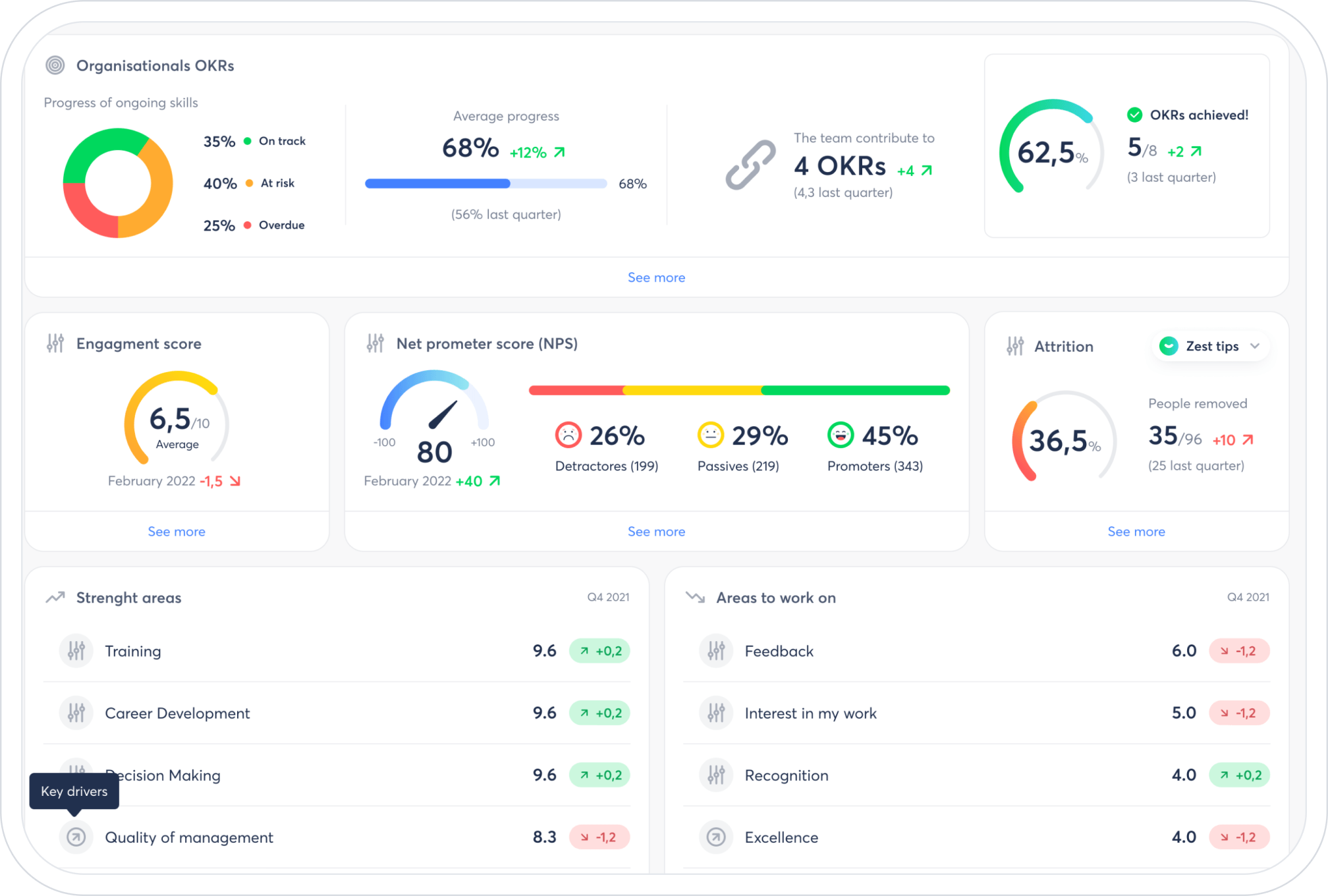
eNPS – Employee Net Promoter Score
The Employee Net Promoter Score (eNPS) is a simple but powerful indicator. It’s typically based on a single question: “Would you recommend your company as a place to work?”
Responses sort employees into three categories:
- Promoters
- Passives
- Detractors
eNPS provides a quick snapshot of overall engagement and how employees perceive the company. But be careful: the indicator alone isn’t enough. It needs to be paired with qualitative analysis to fully understand what’s behind the score.
Regular check-ins
Conversations between managers and employees remain essential. We’re all familiar with the annual performance review, but its yearly frequency is no longer enough to track employee experience on an ongoing basis. Alongside annual reviews, companies can add:
- One-to-ones (weekly, monthly, etc.)
- Quarterly check-ins
- Development reviews
These moments open up communication between managers and employees, creating space to discuss:
- Workload
- Career aspirations
- Support needs
- Everyday frustrations
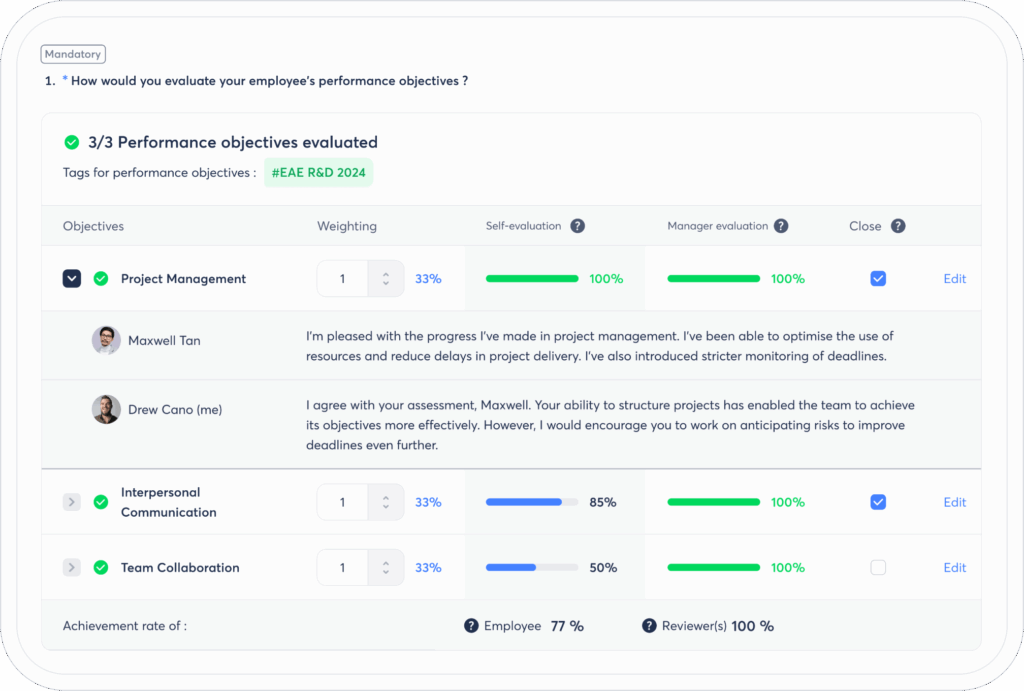
They play a key role in several drivers of employee engagement:
- Autonomy and empowerment
- Professional and personal development
- The quality of relationships and management
A manager’s ability to listen actively is critical to the success of these conversations.
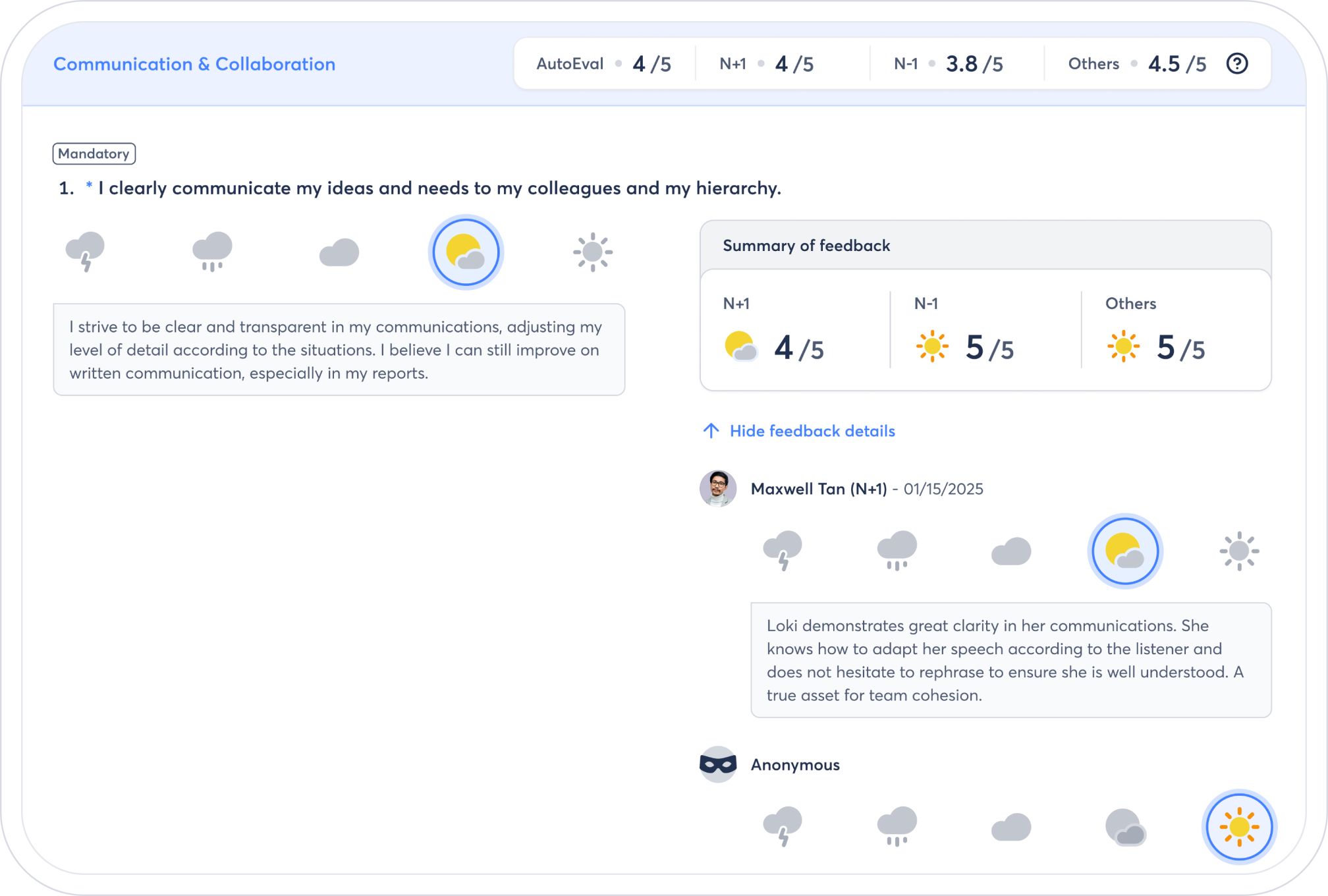
360° feedback
360° feedback gathers input on an employee’s or manager’s skills from their managers and colleagues. The goal is to build a complete picture of professional behavior.
Used well, it supports:
- Recognition
- Managerial growth
- The quality of working relationships
Without the right tools in place, this process can become cumbersome and hard to act on. 360° feedback needs to fit into a broader HR action plan.
Zest’s employee listening software
This is precisely where technology comes into its own. Employee listening software lets you centralize all your HR data, analyze trends, and quickly identify the right levers for action.
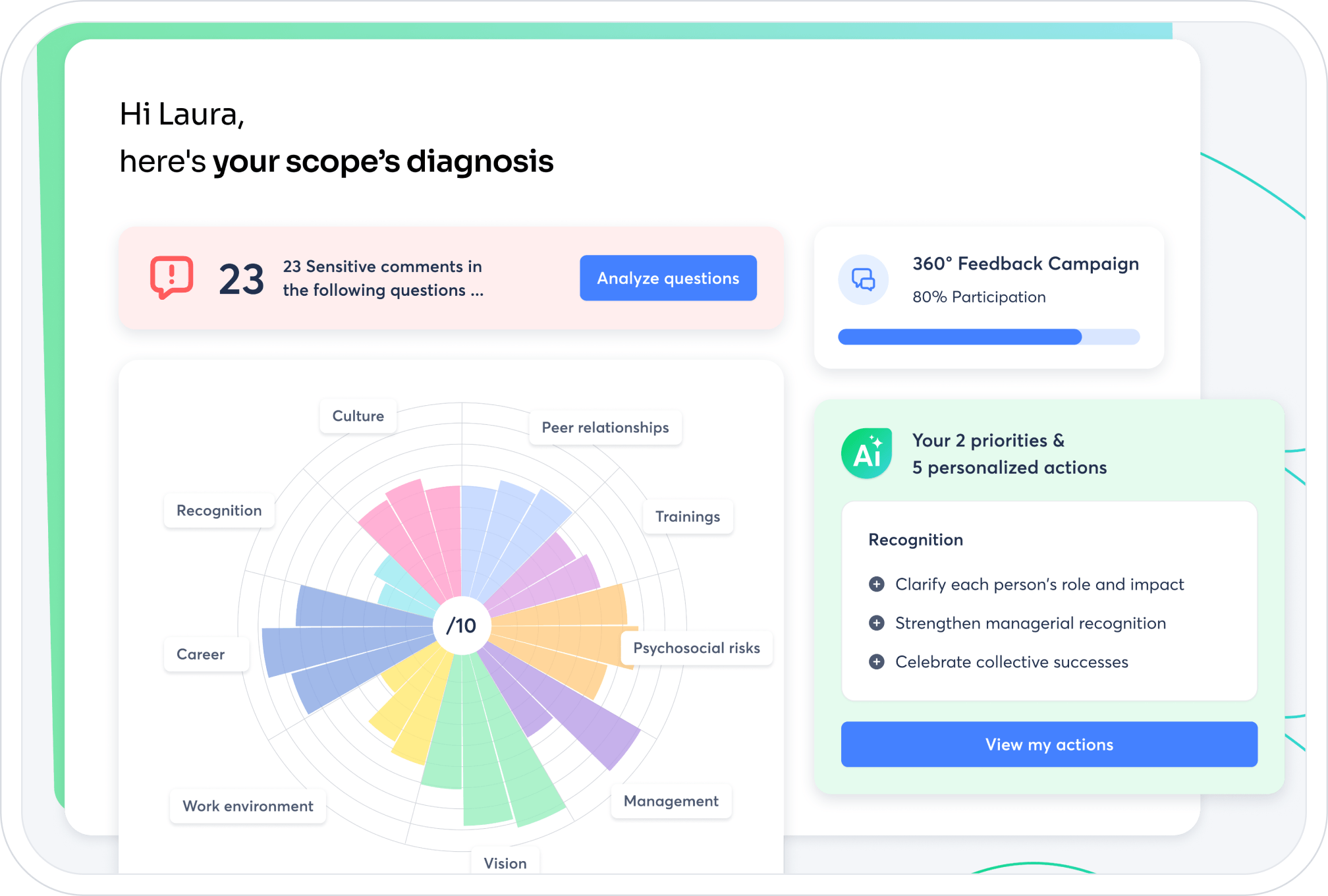
The Zest platform allows you to:
- Measure engagement continuously through regular surveys, mood check-ins, and more
- Roll out automated surveys Analyze HR data with AI
- Identify priority action plans Equip managers to take action
Employee feedback then becomes a true asset: strategic HR data capable of guiding both managerial and HR decisions.
Turning employee listening into concrete action to boost employee engagement
Gathering employee feedback is only the first step. The real value lies in what your company does with all the data collected. Zest’s software helps you analyze HR data with precision to spot trends. The platform then helps you prioritize engagement drivers and get managers involved. Our tool also makes it easy to communicate openly and transparently on the insights gathered and the actions taken to improve employee experience. You can then measure the impact of these actions over time, ensuring effective, ongoing employee listening.
Listen. Analyze. Act. Measure. This cycle is what turns employee listening into a genuine driver of organizational performance. At Zest, we help HR teams make that shift.
Is your organization ready to move from one-off listening to continuous engagement measurement?
Request a demo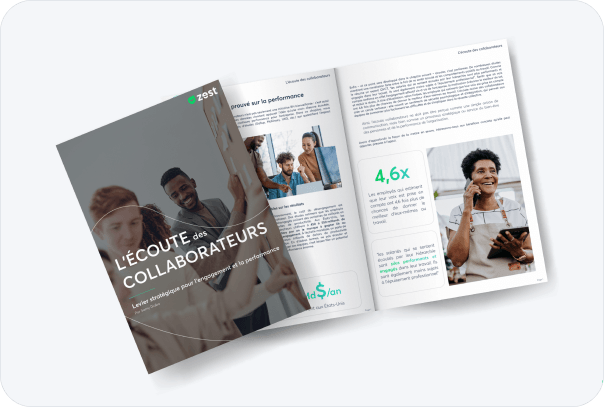
Download your guide for employee listening
Listening drives performance. In this practical guide, discover:
- Use cases across the entire employee lifecycle
- Maturity levels of workplace listening
- Key indicators of engagement and social climate
Our customers say it best
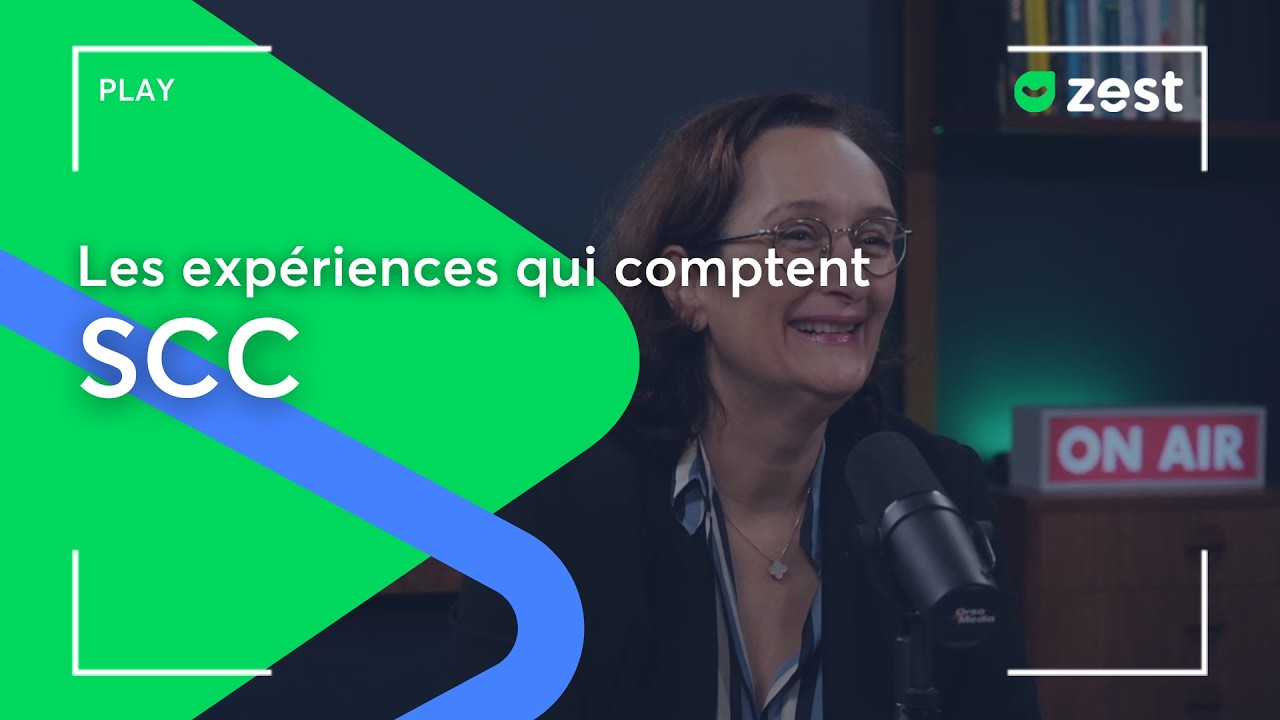
« In one word, Zest is a very easy tool to use. And a tool that lets us see the best of what we have to offer. »
– Marie Lopez, HR Director, SCC France
More news from Zest

Mastering the professional development interview: key strategies and best practices
The professional development interview is more than a legal requirement—it’s a strategic tool for building skills and boosting talent retention.
In this article, discover five key levers to make these conversations truly impactful.

fixed-term contracts and annual reviews: 5 keys to a successful evaluation
Annual performance reviews must be applied to fixed-term contract employees once the company has formalized them for all staff, in order to avoid unequal treatment and legal risks. These interviews, structured around realistic objectives, demonstrated skills, and a clear evaluation framework, provide tangible benefits both for the company (increased productivity, team cohesion, reduced legal risks) and for the employee (skills recognition, identification of training needs, growth opportunities).

The annual review for apprentices: a valuable HR opportunity too often overlooked
Annual reviews for apprentices are a powerful HR lever to develop talent, strengthen engagement, and promote managerial equity. Discover how this strategic practice improves the retention of work-study students and transforms your company into a true springboard for tomorrow’s skills.
Allow all cookies
Continue without accepting

Zest respects your privacy
Zest and its partners use cookies or similar technologies and process personal data which may be cross-referenced with information provided as part of our services for the following purposes: to improve your user experience, to carry out audience statistics and studies to improve our offers, to provide you with services tailored to your interests, to display targeted advertising on our site or those of our partners, and to measure the performance of such advertising. Some cookies are necessary for the operation of the site and our services. You can accept, manage your preferences by purpose or continue browsing without accepting.
Cookie settings
Allow all cookies
